
Growth Every Day
Personalized therapy support focused on helping children better process sensory input.
A Sensory Processing Disorder
Children with sensory processing challenges may experience:
Overreaction or discomfort to fabrics, loud noises, foods, bright lights, or smells.
Gagging with certain food textures or being a picky eater.
Difficulty tolerating hair brushing or teeth brushing.
Clumsiness, poor coordination, balance difficulties, or frequent tripping.
Constant sensory-seeking behaviors such as
Touching objects constantly.
Chewing or mouthing items.
Spinning or jumping.
Leaning into people or objects.
Crashing into things intentionally.
Difficulty with fine motor skills, including:
Handwriting
Coloring or Drawing
Cutting With Scissors
Fastening Buttons or Zippers
Tying Shoes
Trouble grading force, such as using too much or too little pressure when handling objects.
Integration Therapy Helps
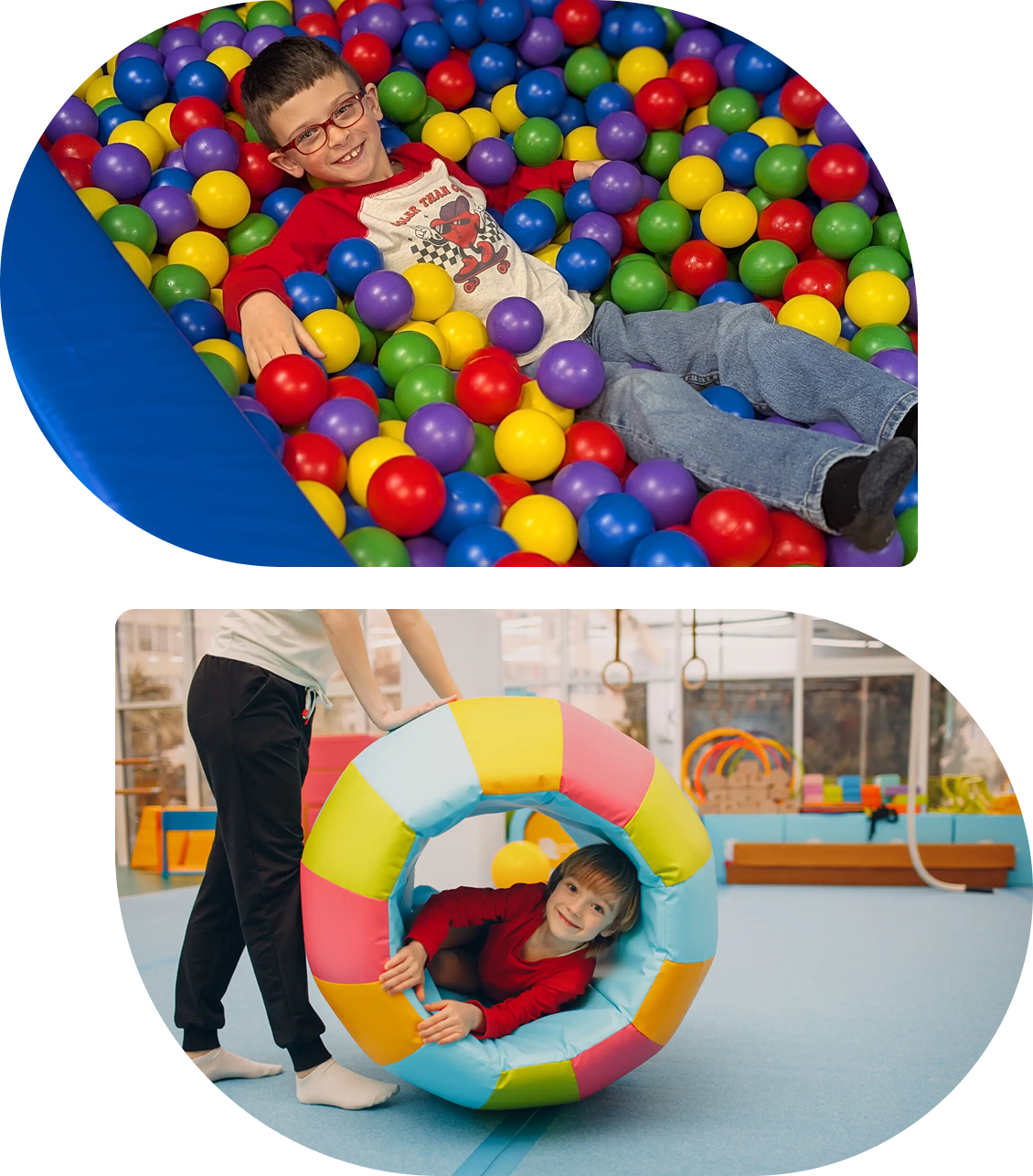
Sensory integration therapy provides therapeutic sensory experiences designed to support regulation and adaptive responses. Through child-led activities, we help children engage with sensory input in a safe and supportive way.
Therapy may include activities such as:
Obstacle Courses to Develop Motor Planning, Strength, and Sensory Processing Skills
Jumping on a Trampoline to Enhance Gross Motor Skills, Balance and to Provide Proprioceptive Input
Playing With Different Textures to Target Tactile Processing
Engage in Activities Using Suspension Equipment (Swings) to Improve Balance, Coordination, and Sensory Processing Skills
Receive Deep Pressure and Engage in Heavy Work Strategies to Improve Body Awareness and Self-Regulation
Our goal is to help children improve daily interactions, build self-regulation skills, and better respond to sensory experiences in everyday life.