
Speech and Learning Support
Specialized designed to help children improve communication, confidence, and academic development.
Signs of a Language Disorder
Signs of a Speech Sound Disorder
Signs of Stuttering (Disfluency)
Signs of a Voice Disorder
American Speech-Language-Hearing Association on these signs https://identifythesigns.org/signs-of-speech-and-language-disorders/
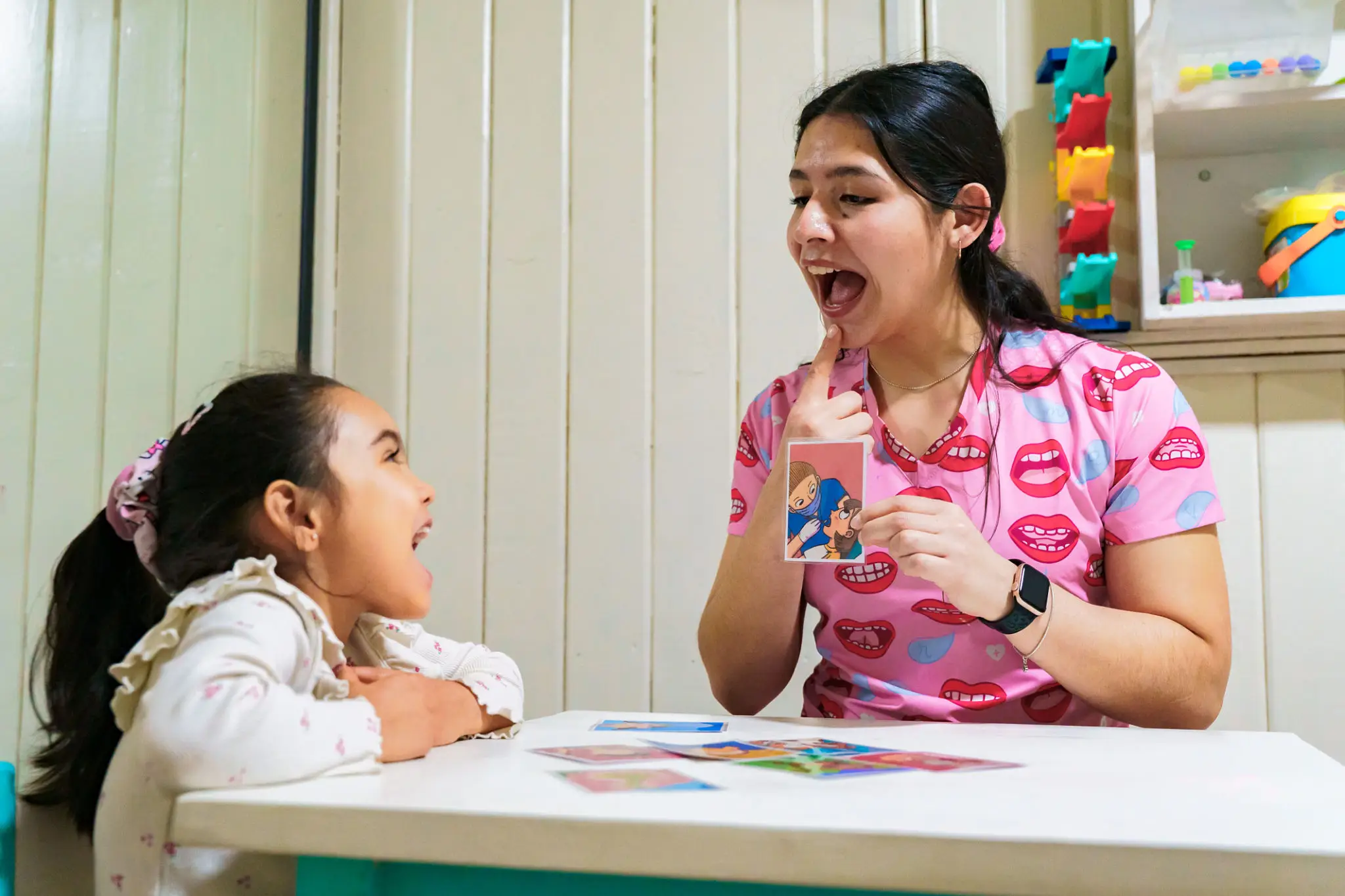

Speech Apraxia Disorder
Childhood Apraxia of Speech (CAS) is a motor speech disorder that makes it challenging for children to coordinate the movements needed to speak clearly. Here are some signs that may indicate your child is experiencing speech apraxia:
These signs can vary, and not every child will show all of them. If you're concerned about your child's speech, a speech-language pathologist can provide a detailed evaluation and support
Developmental Milestones
Below are typical speech and language milestones for children from birth to 6 years. These milestones reflect the development of both expressive (speaking) and receptive (understanding) language.
By 12 Months
- Responds to own name
- Understands simple words like “no” and “bye-bye”
- Babbles with a variety of sounds (e.g., “bababa,” “dadada”)
- Says “mama” or “dada” specifically
- Tries to imitate simple words
By 18 Months
- Says 10–20 words (may not be clear)
- Points to objects or people when named
- Follows simple one-step directions (e.g., “Give me the ball”)
- Uses single words to communicate wants and needs
By 2 Years
- Uses 50 or more words
- Combines two words (“more juice,” “mama go”)
- Names common objects and familiar people
- Follows two-step directions (“Pick up the toy and give it to me”)
- Speech is understood by familiar listeners about 50% of the time
By 3 Years
- Uses 3–4 word sentences
- Speech is understood by unfamiliar listeners about 75% of the time
- Asks simple questions (“What’s that?”)
- Uses pronouns (I, me, you)
- Follows two- or three-step directions
By 4 Years
- Speaks in sentences of 4 or more words
- Tells stories or describes events
- Speech is understood by most people, even those outside the family
- Uses basic grammar correctly (plurals, past tense)
- Answers simple “who,” “what,” “where,” and “why” questions
By 5 Years
- Speaks clearly in full sentences
- Uses future tense (“I will go”)
- Tells simple stories with a beginning, middle, and end
- Understands and uses descriptive words (colors, shapes)
- Follows multi-step directions
By 6 Years
- Has a well-developed vocabulary
- Can participate in conversations and explain ideas
- Uses correct grammar most of the time
- Can retell stories and describe events in detail
Clinical Notes
- There is normal variation in the age of attainment.
- Delays in speech and language may indicate hearing loss, developmental disorders, or other concerns and warrant further evaluation.
- Early identification and intervention can improve outcomes.