
Occupational Therapy

For Everyday Skills Growth

Helping children build independence through better movement, coordination, and daily routines.
benefit-10_feature_image (1)
Pediatric

Occupational Therapy

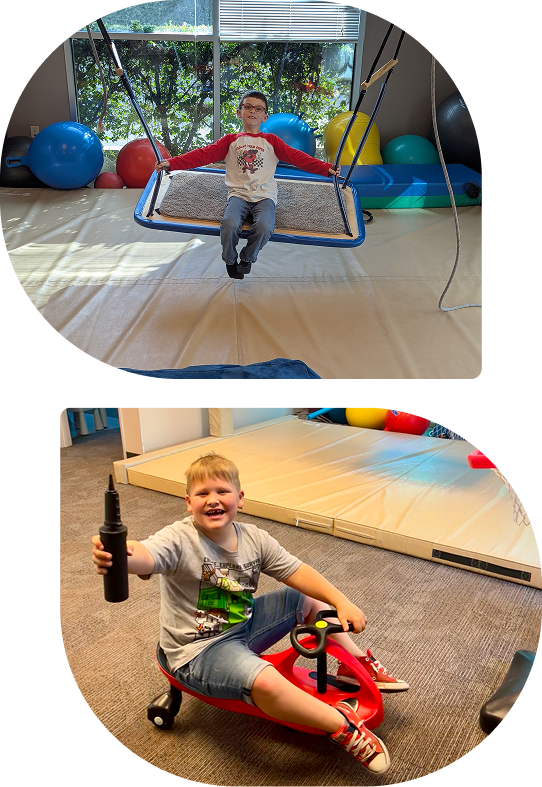
Pediatric occupational therapy is a transformative journey where children unlock new potentials and gain essential life skills through playful, engaging activities designed just for them. At its heart, pediatric OT focuses on empowering children to overcome developmental challenges and achieve greater independence in everyday tasks, whether it's mastering buttoning a shirt or developing the attention and coordination necessary for classroom success.

Our therapists create personalized treatment plans that weave fun into skill-building exercises, addressing areas like fine and gross motor skills, sensory processing, and self-care. Imagine your child gaining confidence as they conquer new challenges and develop skills that enhance their participation in school, home, and community activities.

By contacting us, you open the door to a collaborative partnership where we work hand-in-hand with you to understand your child's unique needs and harness their strengths. Together, we can foster an environment where your child flourishes, achieving milestones that once seemed out of reach. Experience the joy of watching your child thrive with the support of our experienced and dedicated team. Let us be part of your child's success story.

  • Fine Motor Skills: Developing hand-eye coordination, dexterity, and grip strength for tasks like writing and buttoning
  • Gross Motor Skills: Enhancing balance, coordination, and movement for activities like jumping and climbing
  • Sensory Processing and Integration: Addressing sensory sensitivities and helping children regulate responses to sensory input
  • Self-Care and Daily Living Skills: Teaching skills such as dressing, feeding, and grooming to promote independence
  • Visual Motor Skills: Improving the ability to coordinate vision with body movements for activities like cutting and drawing
  • Social and Play Skills: Facilitating engagement in age-appropriate play and interaction with peers
  • Cognitive and Executive Functioning: Building skills for organization, problem-solving, and task completion
  • Environmental Adaptations: Modifying home or school environments to better support participation and accessibility
  • Adaptive Equipment Training: Providing guidance on using tools and devices that promote success in daily activities
  • Self-Regulation: Utilizing programs like the Interoception Curriculum, Zones of Regulation, or the Alert Program for Self-Regulation to help children manage emotions and behaviors
  • Feeding: Addressing underlying sensory issues that affect a child's diet variety and promoting healthy eating habits: We use the SOS approach to feeding, which addresses feeding challenges by focusing on the child’s sensory, motor, oral, cognitive, and emotional development. It is individualized and gradually exposes children to new foods.
Confidence in

Every Task

With guided support, children gain the ability to complete tasks more easily and feel more capable in their routines. Get started now.